
Restoring NYC’s Brownstones: Repair vs. Replacement
There’s something special about walking through neighborhoods like Brooklyn Heights, Park Slope, or the Upper West Side. The brownstone facades, grand stoops, and hand-carved architectural details tell the story of New York City in a way few other buildings can. After spending decades restoring historic stonework, I still appreciate the craftsmanship that went into these homes every time I see them.
At Petrillo Stone, we believe every restoration project is about more than repairing damaged stone. It’s about preserving the history, character, and craftsmanship that make these buildings so iconic.
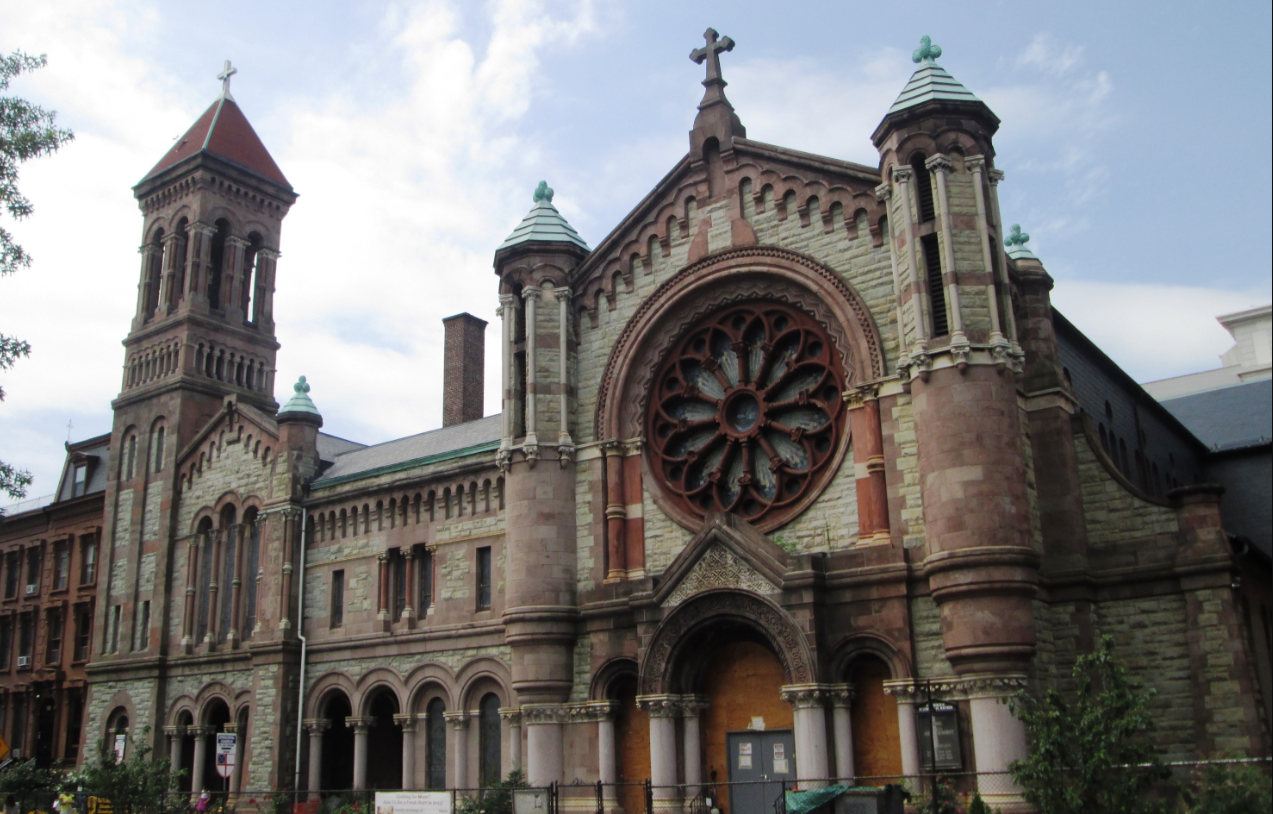 How Brownstone Became New York’s Signature Building Material
From the 1840s through the late 1800s, brownstone became the material of choice for New York City rowhouses. Much of it was quarried in Portland, Connecticut, and parts of New Jersey before being transported into the city by boat.
Builders loved working with brownstone because it was relatively affordable and easy to carve. That allowed artisans to create the decorative columns, lintels, cornices, balustrades, and intricate details that still define these neighborhoods today.
Unfortunately, the same qualities that made brownstone easy to work with also make it vulnerable to weathering after more than a century of exposure.
 Why Brownstone Begins to Deteriorate
One of the most common problems I see is spalling—the flaking, crumbling, or blistering of the stone’s surface.
There are several reasons this happens.
Sometimes the original stone was installed with its natural bedding planes facing the wrong direction. That allows water to penetrate between the layers of sandstone, weakening the stone over time.
New York’s freeze-thaw cycles are another major factor. Water enters the stone’s pores, freezes during the winter, expands, and slowly forces the outer face of the stone apart.
I also frequently encounter repairs completed decades ago using Portland cement. While those repairs were well intentioned, cement is much harder and less breathable than historic brownstone. Instead of allowing moisture to escape, it traps water inside the original stone, often causing even more damage beneath the surface.
Restoration or Replacement?
Every project is different, which is why I never believe in a one-size-fits-all approach.
In many cases, we can restore deteriorated brownstone using specialized restoration materials that closely match the original stone. In other situations, sections of the facade are simply too deteriorated to save and need to be replaced with newly fabricated stone.
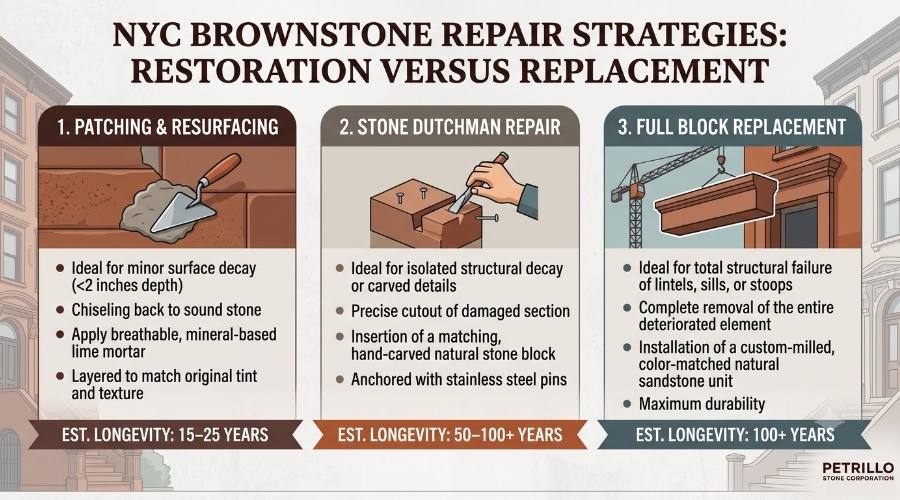
When working on landmark properties, every repair must satisfy the requirements of the New York City Landmarks Preservation Commission. That means the replacement material has to match the original in color, texture, profile, and overall appearance so the repair blends seamlessly with the existing facade.
Combining Traditional Craftsmanship with Modern Technology
At Petrillo Stone, we’ve invested in technology that allows us to recreate historic architectural details with incredible accuracy while still relying on traditional hand craftsmanship to achieve an authentic finish.
Digital Templating and 3D Scanning
Many of the original brownstone quarries are no longer producing stone, making exact replacement more challenging than it once was. Using 3D laser scanning, we capture the precise dimensions of existing brackets, cornices, window surrounds, and other decorative elements directly from the building. This allows us to reproduce complex details without causing additional damage to the historic structure.
Precision Stone Fabrication
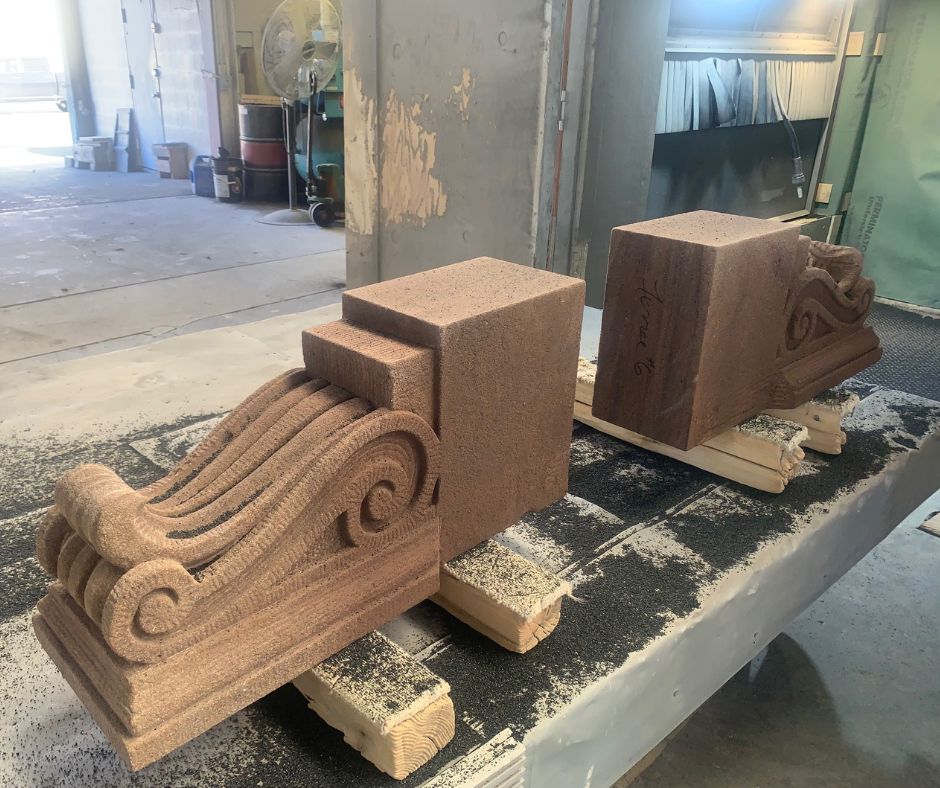
Once we’ve documented the original pieces, we use advanced CNC milling and waterjet cutting equipment to fabricate replacement stone that matches the original design as closely as possible. We carefully select sandstone varieties that meet the requirements of both preservation standards and long-term durability.
The Finishing Touch
Technology gets us remarkably close, but craftsmanship is what makes the restoration disappear. Our experienced stonemasons hand-finish every piece, recreating the original textures, tool marks, and carved details that give historic brownstone its character. It’s this combination of precision and artistry that allows our work to blend naturally with the original facade.
Protecting New York’s Architectural Heritage
Every brownstone we restore represents a piece of New York City’s history. Whether we’re repairing a deteriorated window sill with a Dutchman repair, restoring an ornate cornice, or fabricating an entirely new brownstone entrance, our goal is always the same—to preserve the original beauty of the building while ensuring it remains structurally sound for generations to come.
These facades have already stood for well over a century. With the right restoration techniques and a commitment to quality craftsmanship, they can continue telling New York’s story for another hundred years.